

Our Story
Hvammsvík has a rich history. The Hvammsvík estate is a family owned estate consisting of 1200 acres along the shoreline of Hvalfjörður or Whalefjord” – a historic and remote fjord in the Southwest of Iceland, yet only a 45 minute drive from Reykjavik city center.
The estate is perfectly located between the mountain Reynivallaháls and the ocean and offers incredible nature and wildlife all around.
The estate is a historical landmark that was first discovered by the vikings 1000 years ago as recorded in Landnáma, the Icelandic book of settlers, dating back to the 11th century.
During World War II, Hvammsvík was taken over by the allied forces as their naval headquarters in Iceland. At its peak there were almost 40.000 soldiers here and over 200 ships moored in the fjord. During the War Hvammsvík was code named “Falcon Crest” and “Falcon Beach” in order not to reveal its true location.
The Hill Top house located on the top of the hill on the Hvammsvik estate was built by the British Navy as a communications headquarters during WWII, the house has since been fully renovated. The design respects its history while introducing contemporary comforts.
The story goes that when Winston Churchill visited Iceland in 1942 to meet Franklin D. Roosevelt Jr., it is said they held secret meetings at the Hill Top House, then as previously mentioned, code-named Falcon Crest.
Sustainability
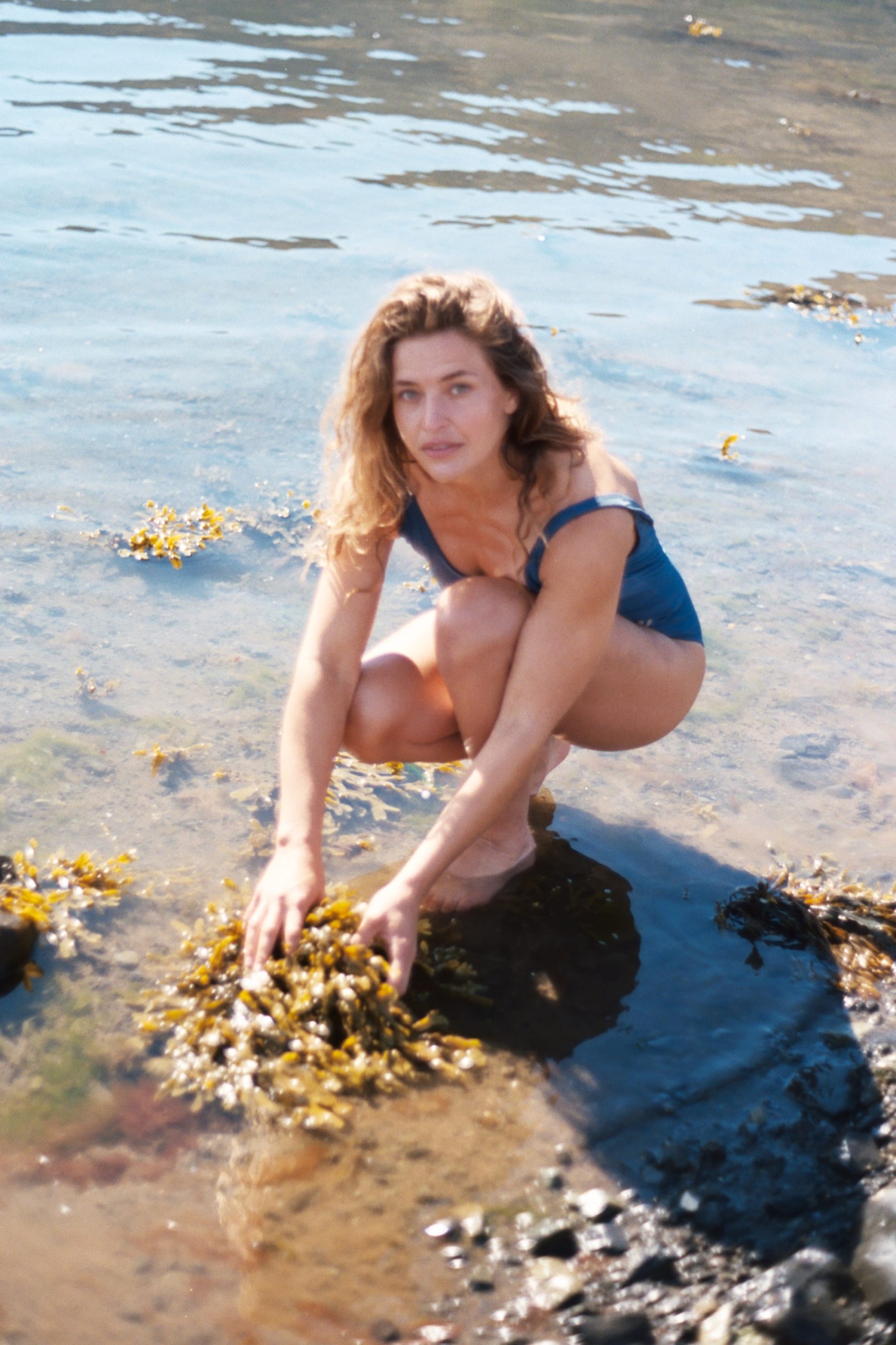
Sustainability is at the very heart of everything we do at Hvammsvík.
Our vision is for Hvammsvík to become the first resort in the western world to operate fully off the grid. Today, we already have our own cold-water well and a constant flow of fresh water sourced from the mountain Reynivallarháls. We also operate our own geothermal hot water well, which heats all the properties on the estate and supplies our natural hot springs.
Looking ahead, we are exploring ways to generate electricity on-site, either by harnessing geothermal power or through solar energy. Our goal is to be fully self-sufficient in electricity by the time we open our hotel in 2028.
In addition, we are able to source food and other necessities from neighboring farmers, greenhouses, and the ocean surrounding Hvammsvík. Whenever possible, we collaborate with local craftsmen and artists in shaping the unique atmosphere and setting of Hvammsvík.
Finally, we encourage all guests to respect both one another and the surrounding nature, as they enjoy the spectacular landscapes and rich wildlife that the Hvalfjörður (Whale Fjord) has to offer.
Our story is continuing to evolve and we look forward to the future.
The Temple
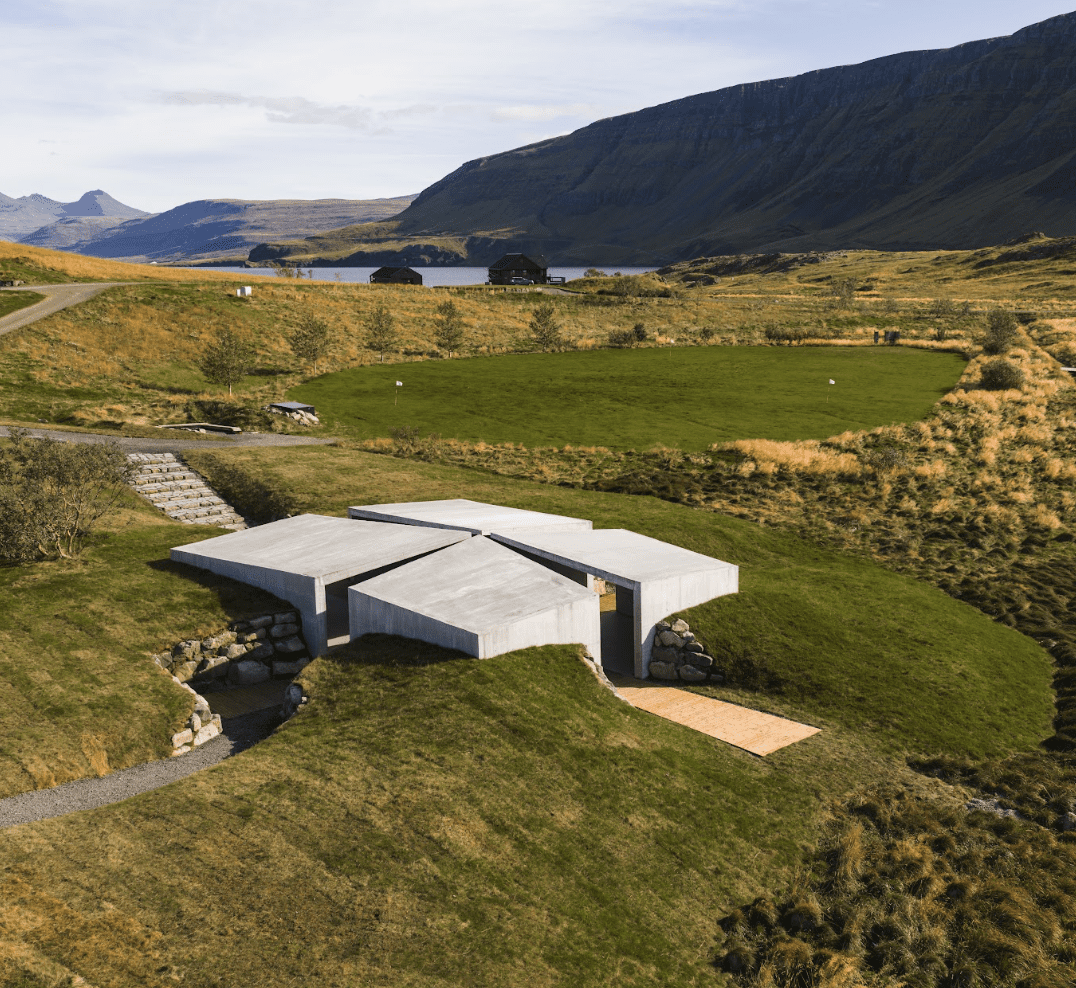
The new Temple, or Hof, in Hvammsvík is as much a sculpture as it is a sacred place. Hvammsvík and Hvammur are first mentioned in Landnáma, the Book of Settlers, which documents the early Norse settlers in Iceland. Hvamm-Þórir is known to have settled in Hvammsvík around AD 900. At that time, Viking settlers worshipped Norse gods such as Thor, Odin, and Freyja, and built Hofs, temples dedicated to their rituals.
When Christianity became the official religion around AD 1000, many of these temples coexisted with churches. Some were likely repurposed as Christian sanctuaries. This blending of traditions inspired the creation of the new Temple at Hvammsvík. It is intended as a sacred space that welcomes all, regardless of religion or origin.
“The inspiration for the temple was the idea that religions and sacred places could, and still can, coexist. Now more than ever, I think that is a powerful and important message. Everybody is welcome to interpret the Temple as they wish. We will not judge anyone; our only hope is that our guests respect each other and the surrounding nature while visiting Hvammsvík,” says Skúli Mogensen.
As an outdoor sculpture, the Temple measures roughly 18 meters long and 14 meters wide. Built from exposed architectural concrete, it is open to the elements. The roof “floats” above the structure in the shape of a Maltese Cross, while the floor echoes the Celtic Cross with a central circle that can serve as a fire pit in line with pagan tradition. The design blends seamlessly with the surrounding landscape, casting dramatic shadows as sunlight enters from openings aligned to the cardinal directions.
“Throughout history, many remarkable buildings, such as the Pantheon in Rome or Hagia Sophia in Istanbul, have been repurposed as sacred spaces over centuries. Yet very few have been purposely built as places that welcome all faiths. We hope the Temple will take on a life of its own as people explore and expand upon this concept in the years to come.”
The Temple was designed by Skúli Mogensen for Gríma Björg Thorarensen to celebrate their wedding on August 16, 2025. On that day, Bishop of Iceland Séra Guðrún Karls Helgudóttir performed the wedding ceremony and blessed the Temple as a Christian church.
Art
The Hvammsvík Collection was born out of a deep passion and curiosity for art and creativity in all its forms. Over the years, the collection has grown and evolved, reflecting our whimsical taste at any given moment, with each piece carrying its own story.
We have never followed a particular movement or style of art, rather, we simply acquire works that we fall in love with. Whenever possible, we seek to connect with the artists we collect and often invite them to visit or stay at Hvammsvík, giving us the opportunity to learn more about the story behind their work.
While most of the works are by contemporary Icelandic artists, the collection also features important pieces by established modern artists from both Iceland and abroad. We strongly believe that art should be lived with and enjoyed daily. That is why all of our houses and buildings at Hvammsvík are filled with original artworks, which we hope our guests will enjoy as much as we do.
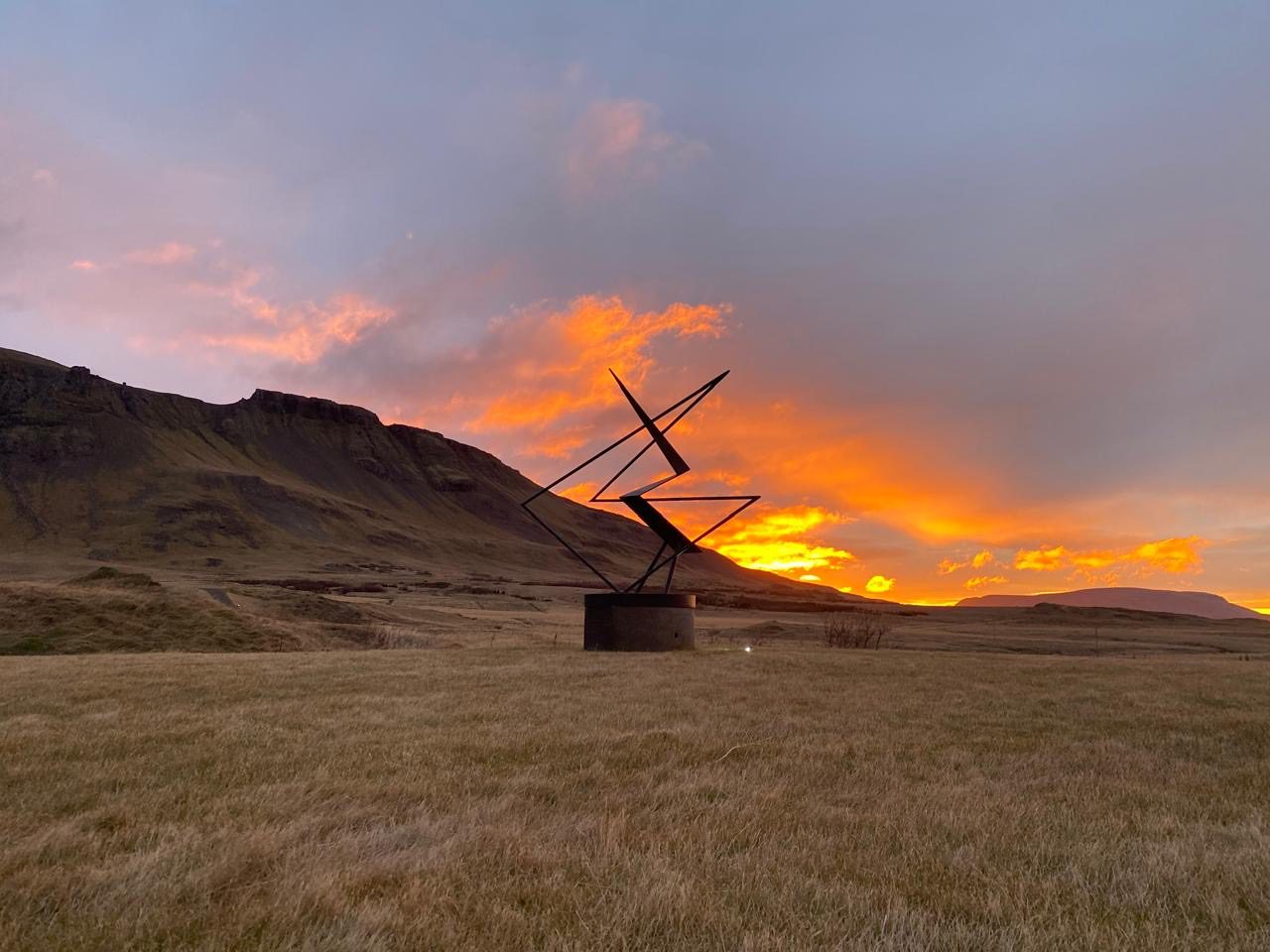
Asmundur Sveinsson, Phoenix (1961)